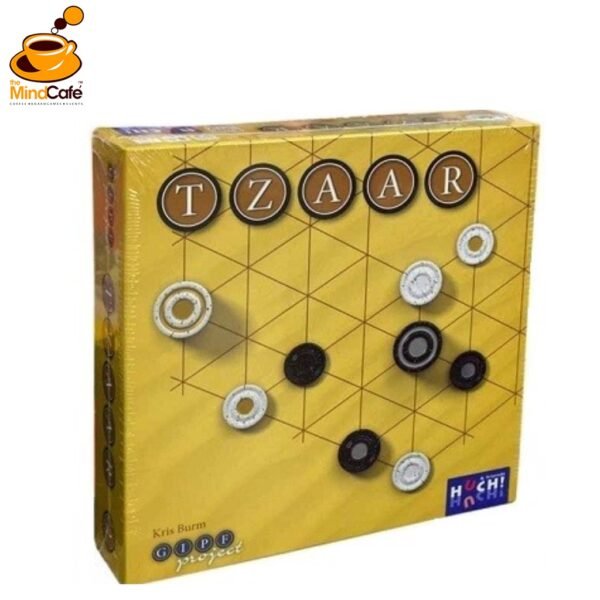
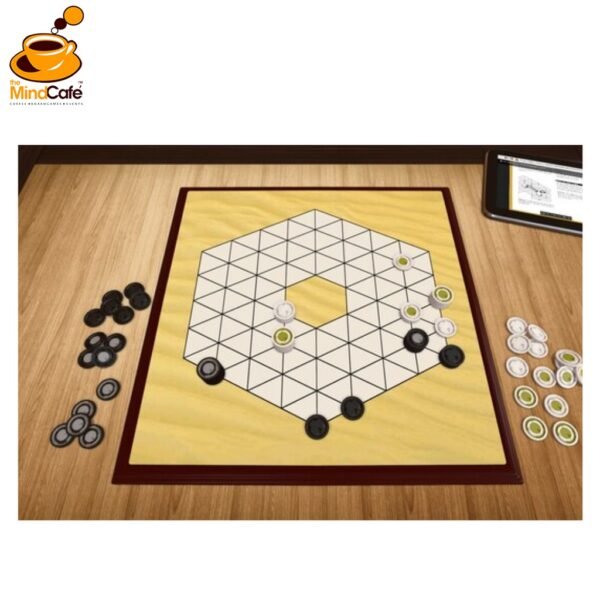
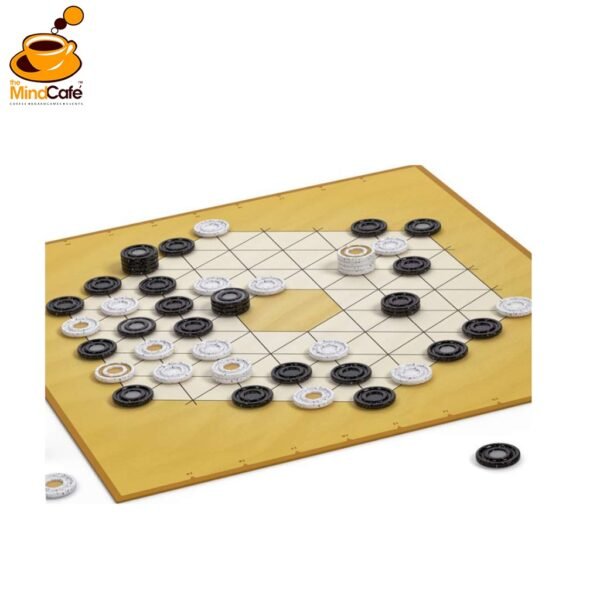
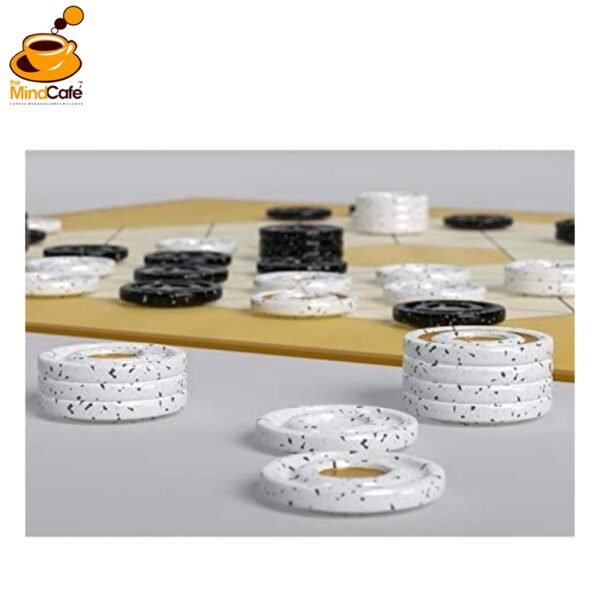
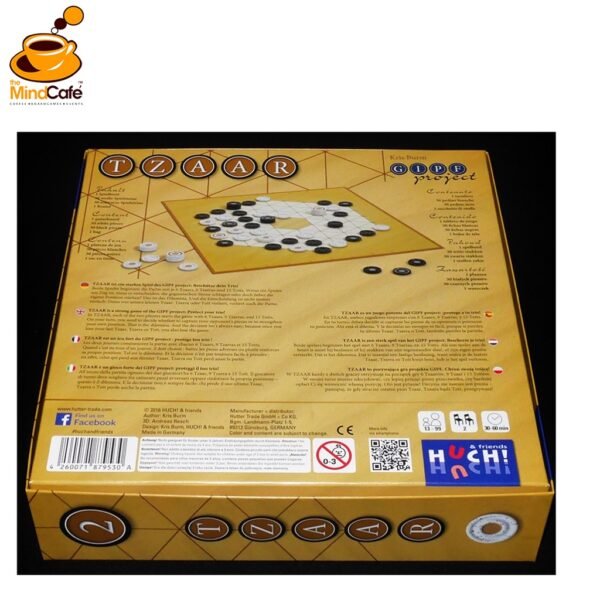
TZAAR is a game about making choices. Both players have 30 pieces, divided in three types: 6Tzaars, 9Tzarras and 15Totts The three types of pieces form a trinity: They cannot exist without each other. The aim is either to make the opponent run out of one of the three types of pieces or to put him in a position in which he cannot capture any more. The tricky question the players will have to ask themselves on each of their turns is: “Shall I make myself stronger or my opponent weaker?” Meaning: Will you capture an opponent’s piece and make him weaker, or will you jump on top of one of your own pieces and make yourself stronger? If you choose to jump on top of your own pieces too often, you will probably leave your opponent with too many pieces on the board. On the other hand, if you capture too often, you may end up with pieces that are not strong enough at the end of the game. What to do? Up to you to decide!
Game Genre: Strategy Game
No. of Players: 2 Players
Suitable for ages 13 and above
Game Duration: 30-60 mins
Family/Kids Friendly: Recommended for ages 13 and up
Game Contents:
1 game board
30 white basic pieces
30 black basic pieces
1 bag
1 rulebook
How to Play?
1. Place the board between the players so that the long side runs from one player to the other.
2. Put all the pieces randomly on the board. The intersections constitute the play area and are henceforth
referred to as spaces. When all 60 pieces are on the board, all spaces will be occupied.
3. Draw lots for your color. White begins.
Note: If you do not like to begin with a random start
position, see points G. and H. below
TZAAR
TZAAR is a game about making choices. Both players have 30 pieces, divided in three types: 6Tzaars, 9Tzarras and 15Totts The three types of pieces form a trinity: They cannot exist without each other. The aim is either to make the opponent run out of one of the three types of pieces or to put him in a position in which he cannot capture any more. The tricky question the players will have to ask themselves on each of their turns is: “Shall I make myself stronger or my opponent weaker?” Meaning: Will you capture an opponent’s piece and make him weaker, or will you jump on top of one of your own pieces and make yourself stronger? If you choose to jump on top of your own pieces too often, you will probably leave your opponent with too many pieces on the board. On the other hand, if you capture too often, you may end up with pieces that are not strong enough at the end of the game. What to do? Up to you to decide!
$59.90
Add To Cart


TZAAR is a game about making choices. Both players have 30 pieces, divided in three types: 6Tzaars, 9Tzarras and 15Totts The three types of pieces form a trinity: They cannot exist without each other. The aim is either to make the opponent run out of one of the three types of pieces or to put him in a position in which he cannot capture any more. The tricky question the players will have to ask themselves on each of their turns is: “Shall I make myself stronger or my opponent weaker?” Meaning: Will you capture an opponent’s piece and make him weaker, or will you jump on top of one of your own pieces and make yourself stronger? If you choose to jump on top of your own pieces too often, you will probably leave your opponent with too many pieces on the board. On the other hand, if you capture too often, you may end up with pieces that are not strong enough at the end of the game. What to do? Up to you to decide!
Game Genre: Strategy Game
No. of Players: 2 Players
Suitable for ages 13 and above
Game Duration: 30-60 mins
Family/Kids Friendly: Recommended for ages 13 and up
Game Contents:
1 game board
30 white basic pieces
30 black basic pieces
1 bag
1 rulebook
How to Play?
1. Place the board between the players so that the long side runs from one player to the other.
2. Put all the pieces randomly on the board. The intersections constitute the play area and are henceforth
referred to as spaces. When all 60 pieces are on the board, all spaces will be occupied.
3. Draw lots for your color. White begins.
Note: If you do not like to begin with a random start
position, see points G. and H. below
Related Products
Flying Kiwis
Add To Cart
Catan Junior
Add To Cart